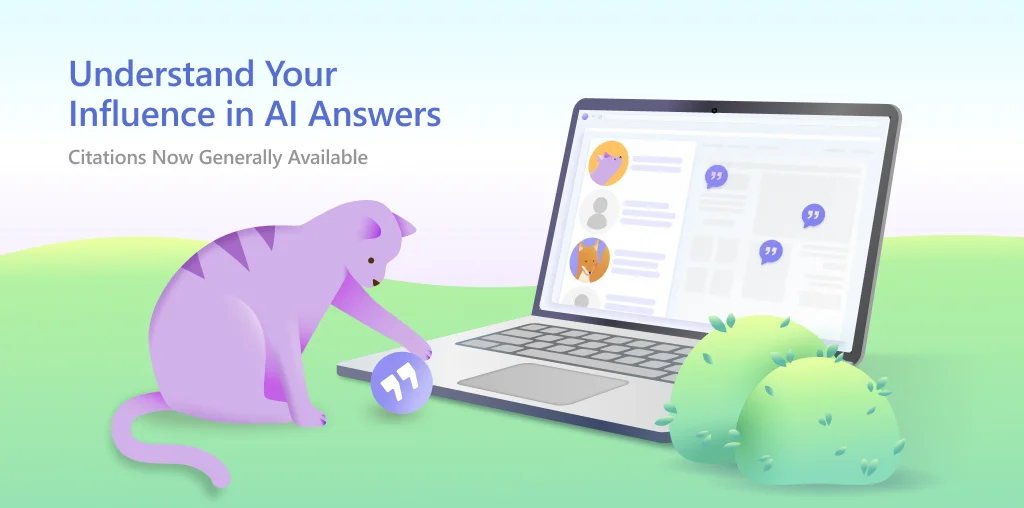
Microsoft Clarity has introduced the AI Citations Report, now generally available, to help site owners understand how their content is referenced in AI-generated answers. As AI-generated answers become a primary way users discover information online, visibility depends less on traditional SEO metrics like rankings and clicks, and more on whether content is used to shape AI responses. Many teams still measure SEO traditionally, missing out on visibility if their content isn't cited in AI answers.
Purpose and Functionality of Citations in Microsoft Clarity
The Citations feature bridges this gap by showing when and how content is cited in AI-generated answers, revealing opportunities for visibility beyond search rankings. It tracks when pages are discovered and used as sources in the grounding process AI systems use to generate responses. For example, if content isn't cited in an AI assistant's answer, even a #1 search ranking won't make it visible in that discovery moment.
Initially launched in preview to help publishers and brands see how their content appeared in AI answers, feedback led to improvements in measuring, aggregating, and presenting citation data. Now in general availability, Citations helps site owners understand their content’s participation in AI experiences and track visibility trends over time.
Citation Dashboard Metrics
The Citation dashboard summarizes citation activity across several key areas:
- Page citations: Total times pages from a domain are referenced in AI answers during a selected period, including multiple citations within the same answer.
- Share of authority: Competitive metric showing the percentage of total citations attributed to a domain compared to others cited in the same queries.
- AI referral traffic: Percentage of site sessions originating from AI assistants, calculated as AI-referred sessions divided by total sessions.
- Queries: Lists queries AI systems use to retrieve and evaluate content, helping understand user intent and content connection.
- My cited pages: Page-level view of URLs cited in AI answers, citation counts, and associated grounding queries, identifying frequently trusted content.
- Trendlines: Analyze changes over time in cited pages and queries as content and AI query patterns evolve.
Additional updates include improved reporting models, query views, filtering, and pagination for better performance with larger datasets and longer time ranges.
Getting Started with Citations
Citations is available for Microsoft Clarity projects. To use it, create a Clarity project and install the tracking code on your site. The dashboard automatically surfaces insights like grounding queries, cited pages, share of authority, and AI-referred traffic trends. Domain ownership verification may be required via Bing Webmaster Tools or Google Search Console. For projects with multiple domains, a single domain must be selected for citation reporting, with no current support for changing it later.
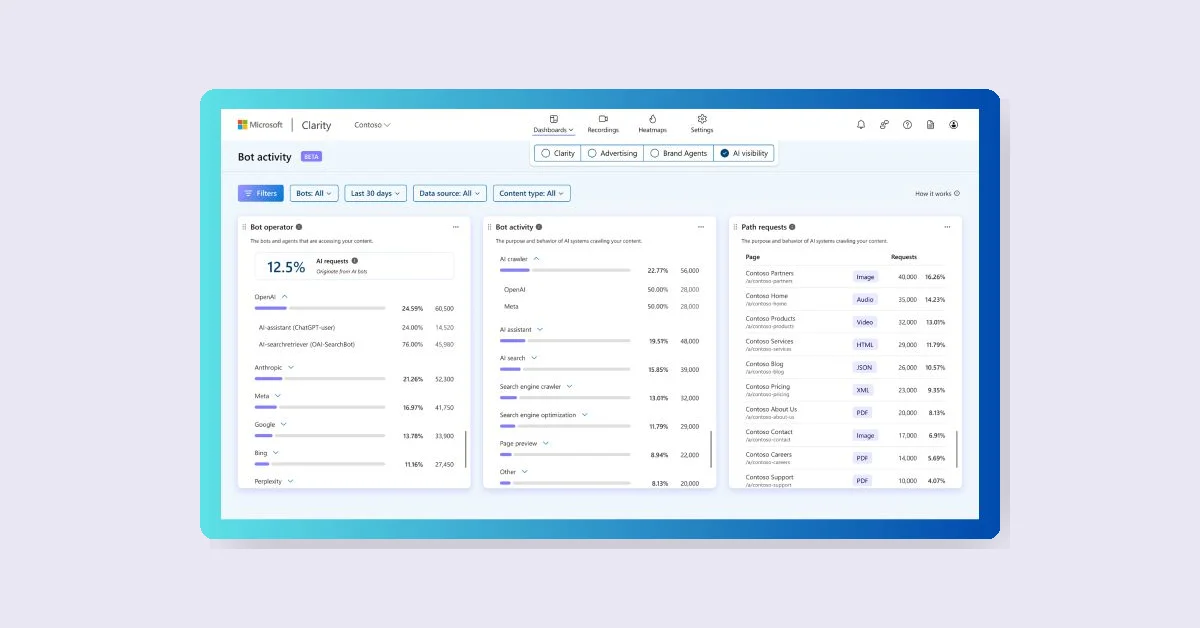
The dashboard is accessible in Microsoft Clarity under:Dashboards → AI Visibility → Citations
This provides publishers and brands a centralized view of how their content is discovered, cited, and represented in AI-generated experiences over time.
Future Developments
Microsoft Clarity plans to expand Citations with additional insights, including topic insights that group cited queries into intent-driven themes. This will help teams understand not only what content is surfaced but why and in what context AI systems select it. These insights will offer richer competitive and attribution analysis, showing where content appears and its contribution strength relative to other sources. Upcoming features will provide actionable recommendations to fill content gaps, build authority on key topics, and increase presence in AI answers that drive demand. These capabilities are launching soon.