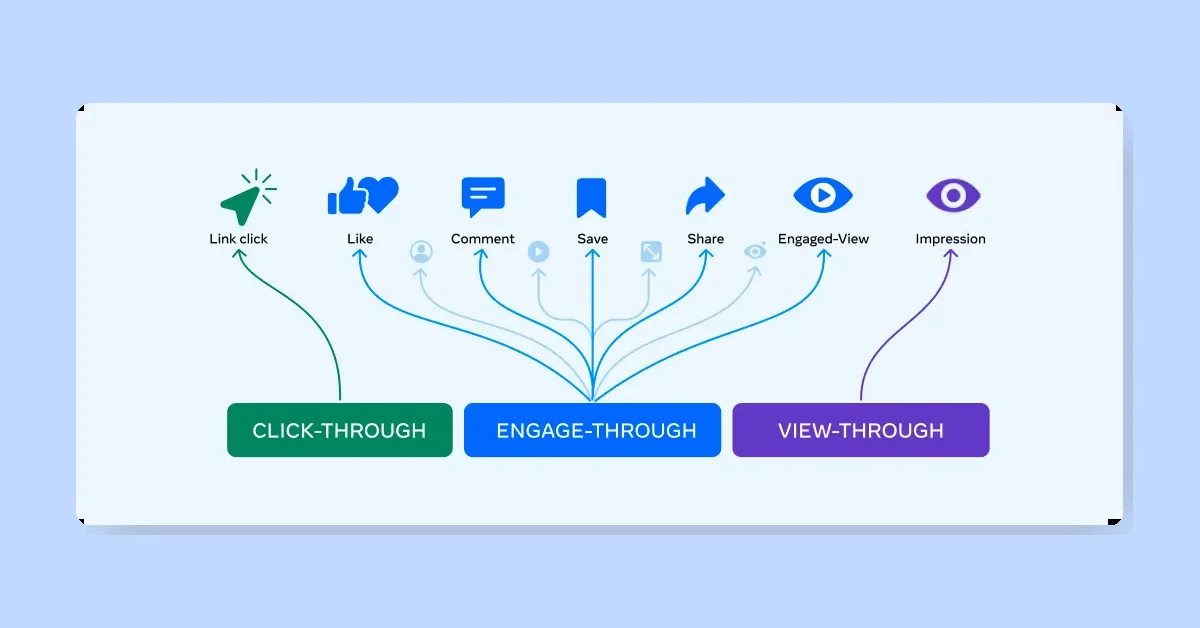
Meta is updating its Ads Manager conversion attribution to clarify and improve how conversions are credited. Historically, click-through attribution counted conversions following any click on an ad—not just link clicks—leading to confusion. Now, click-through attribution will only count conversions after a click on a link, aligning results more closely with actual traffic driven by ads.
Changes to Attribution Definitions
- Click-Through Attribution: Previously included any click (likes, shares, comments, etc.) followed by a conversion within seven days. Going forward, it will exclusively include link clicks for website and in-store conversions.
- Engage-Through Attribution: Formerly called "engaged-view," this is being renamed and expanded. It now includes conversions from video views (at least 5 seconds watched) and all other non-link click actions like reactions, comments, shares, and saves. Unlike the previous engaged-view, which applied only to videos, engage-through applies to all ad formats.
What Counts as a Link Click?
Meta’s definition of link clicks is broader than just website clicks and includes:
- Websites
- App stores or deep links
- Click to call or message
- Maps/directions
- Shops
- Lead forms
- Marketplace
- Instagram profile views (for relevant ads)
- Playable experiences
- Videos launching watch & browse experiences
- Videos hosted externally (e.g., YouTube, Vimeo)
While this list might seem extensive, these additional link clicks are rare when using Website conversion locations and performance goals focused on maximizing conversions.
Summary of Key Changes
- Click-through attribution now requires a click on a link before conversion.
- Engage-through attribution replaces engaged-view attribution.
- Engage-through includes both former engaged-view conversions and conversions from non-link clicks.
Impact of These Changes
- Click-through conversion results should now better match Facebook-referred conversions in third-party reports, especially for 1-day click conversions.
- Few conversions are expected to shift from click-through to engage-through since non-link click conversions are likely uncommon.
- Advertisers may see a slight drop in click-through attribution but a corresponding increase in engage-through results, keeping total conversions stable if engage-through attribution remains enabled.
- Differences in attribution can be analyzed using Meta’s Compare Attribution Settings or Breakdown by Attribution Setting features.
- Those who disabled engaged-view (now engage-through) attribution may notice a drop in total reported conversions.
Overall, these changes aim to reduce confusion and improve the accuracy of conversion attribution in Meta Ads Manager.