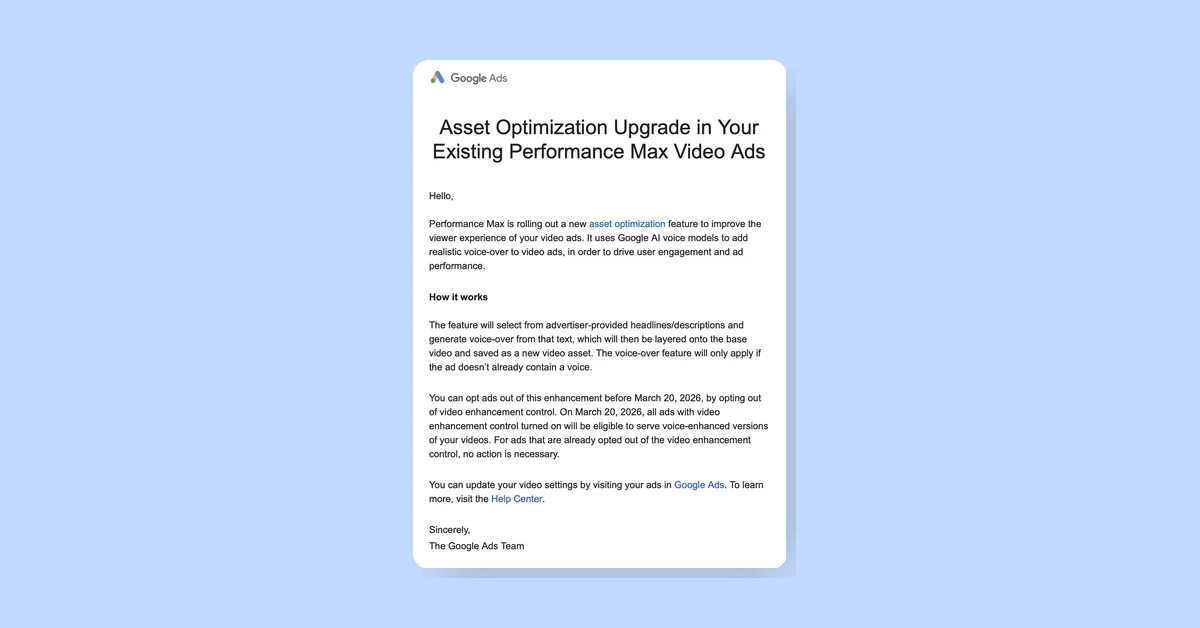
Google will add AI voice-over to Performance Max video ads by generating voice from headlines/descriptions and layering it onto videos without existing voice. This new feature creates a new video asset and is opt-out, not opt-in. Advertisers must disable it by March 20, 2026, under video enhancement controls if they don't want it. After that, voice-enhanced versions may be served automatically.
Upload all Meta ad types in bulk directly from Google Sheets, single image, video, carousel, and flexible ads. Control placements, multiple headlines, primary texts, descriptions, and creatives from one spreadsheet. Built for agencies and teams managing dozens of ads across multiple accounts, helping you launch faster, stay consistent, and avoid costly manual errors.
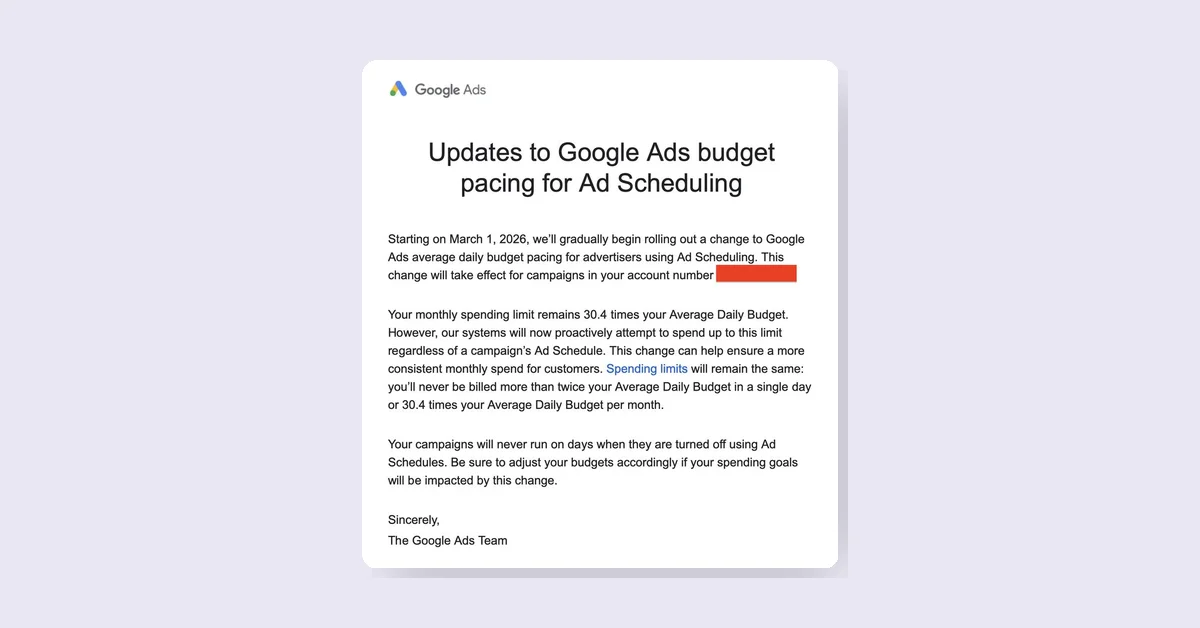
Starting March 1, 2026, Google Ads will change budget pacing for campaigns using Ad Scheduling. Monthly spending limits stay at 30.4 times the Average Daily Budget, but systems will try to spend up to this limit regardless of the Ad Schedule. Daily spend won't exceed twice the Average Daily Budget. Campaigns won't run on days they're turned off. Advertisers should adjust budgets if needed due to this change.
Video impressions are now included in the conversion paths report, offering deeper insights into the role of YouTube in your strategy. Previously, only click and engaged-view conversions were included. This update provides insights into video ads' influence on user journeys without affecting bidding or Data-Driven Attribution. It supports video impression reporting for YouTube, Shopping campaigns, and DemandGen.
New Google Ads integration with Canva allows users to upload Canva assets directly into Google Ads. This streamlines the process for testing new concepts in Performance Max. Imported assets are stored in the Asset Library and provide access to specific guidelines for Pmax. Users are encouraged to share their experiences with the integration.