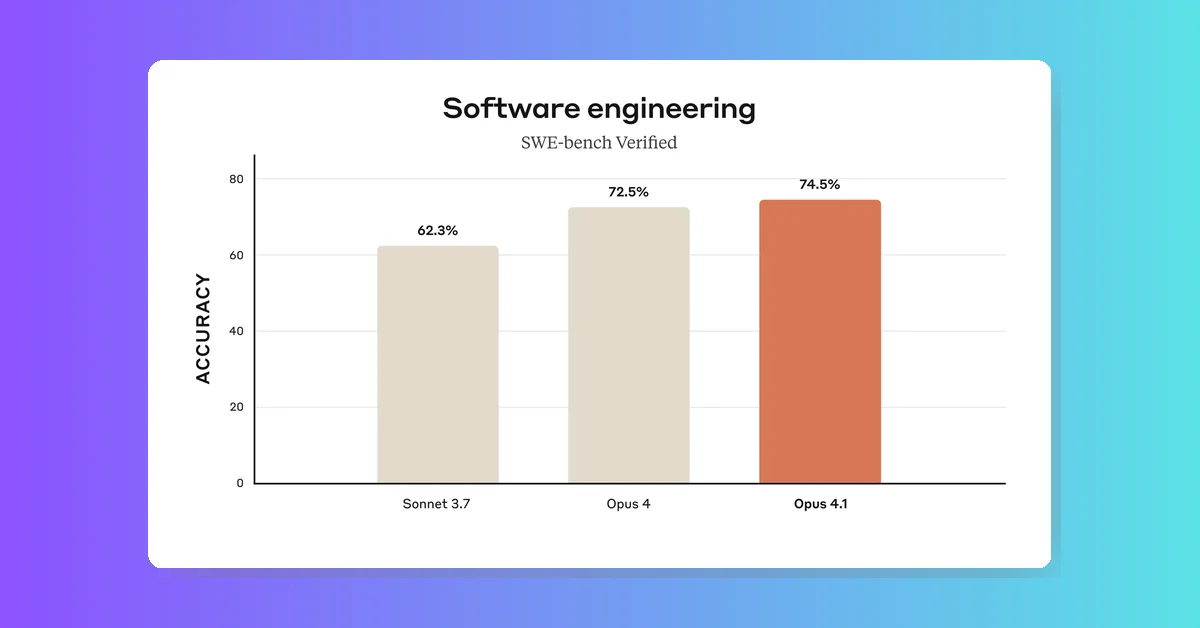
Claude Opus 4.7, Anthropic's latest model, is now generally available and represents a significant advancement over Opus 4.6, especially in advanced software engineering tasks. It excels at handling complex, long-running coding work with rigor, consistency, and self-verification, allowing users to confidently delegate their hardest coding challenges. The model also features improved vision capabilities with higher image resolution and produces more tasteful, creative outputs for professional tasks like interfaces, slides, and documents. While less broadly capable than Claude Mythos Preview, Opus 4.7 outperforms Opus 4.6 on various benchmarks.
Following the announcement of Project Glasswing, which addresses AI risks and benefits in cybersecurity, Opus 4.7 is the first model released with built-in safeguards to detect and block high-risk or prohibited cybersecurity requests. These measures are part of a cautious rollout strategy before a broader release of Mythos-class models. Security professionals interested in legitimate cybersecurity uses can join Anthropic’s Cyber Verification Program.
Opus 4.7 is accessible across all Claude products, APIs, and platforms including Amazon Bedrock, Google Cloud’s Vertex AI, and Microsoft Foundry, with pricing unchanged from Opus 4.6 at $5 per million input tokens and $25 per million output tokens. Developers can access it via the Claude API using the identifier claude-opus-4-7.